
Be ready before every minute counts.
Clarify the first decisions, responsibilities, communication, and recovery steps your site needs during an emergency.
Use the response guide
Make the next safe action obvious.
In an incident, a useful plan answers simple questions quickly: who raises the alarm, who coordinates the response, where people go, how everyone is accounted for, and what information responders need.
Use this guide to check the hand-offs in your procedure. Keep the site-ready list current and practise it with the people who will use it.
Prepare the hand-offs before the incident.
Start with the situation that applies. Your approved procedure and the direction of emergency services always take priority.
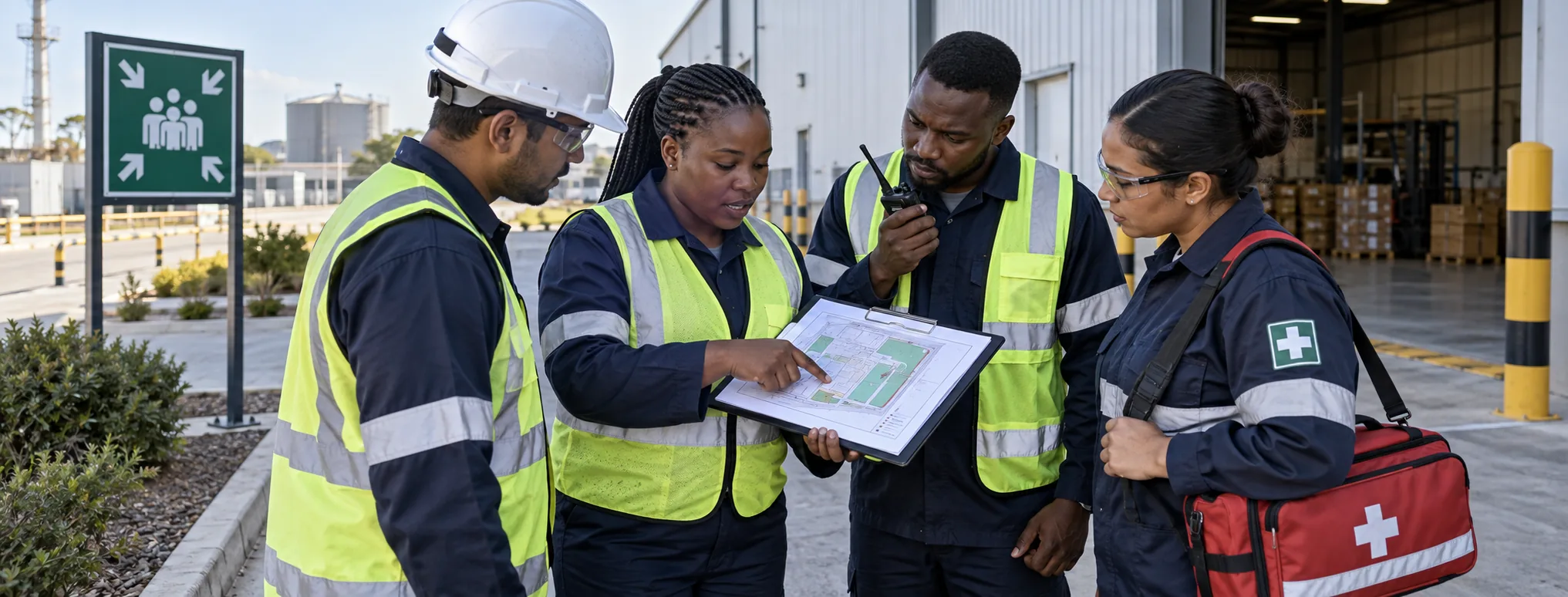
- Protect
- Keep people away from danger.
- Communicate
- Raise the alarm and share clear facts.
- Account
- Confirm who is safe and who may need help.
- 1
Alarm or discovery
Raise the alarm, call emergency services, and stop work if it is safe to do so.
- Owner
- Person discovering the incident and response lead
- Record
- Time raised, location, and initial information shared
- 2
Evacuation
Use the safest available route, assist people who need help, and move to the assembly point.
- Owner
- Wardens and assembly-point coordinator
- Record
- Headcount, missing people, and route issues
- 3
Injury or illness
Call for first aid, keep the area safe, and make a clear handover to medical responders.
- Owner
- First aider and response lead
- Record
- Treatment, handover, and incident details
- 4
Fire, spill, or release
Keep people away from the hazard and isolate the area only when trained and safe to do so.
- Owner
- Response lead with trained specialist support
- Record
- Substance or source, controls used, and responder advice
- 5
Handover and recovery
Secure the scene, preserve information, and agree when controlled re-entry can happen.
- Owner
- Site lead and emergency services
- Record
- Instructions received, decisions, and next actions
Assign every emergency role.
Every appointment should be written, accepted, trained, and backed by a current contact route.
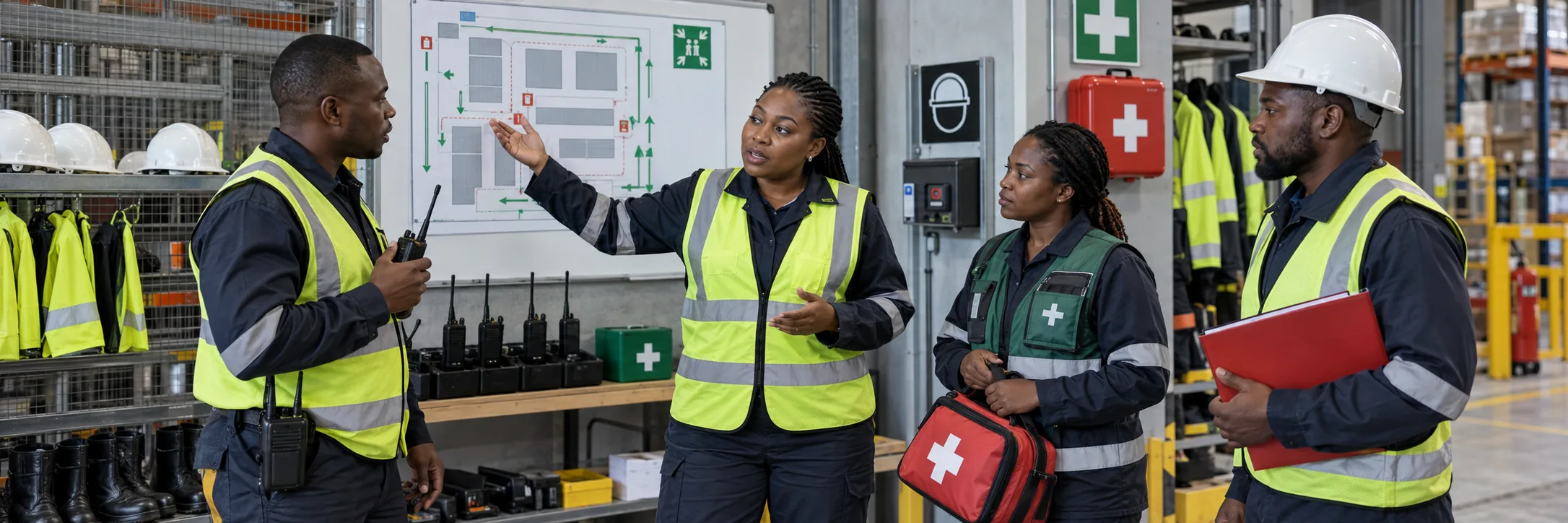
- Response leadCoordinates the plan, liaises with emergency services, controls access, and authorises the next decision.
- WardensGuide people out, sweep assigned areas where safe, and support the assembly-point count.
- First aidersProvide immediate care within their training and hand over clearly to medical responders.
- Everyone on siteRaise concerns, follow instructions, use the safest route, and report at the assembly point.
Test the response plan on site.
Test the arrangements with the people who use the workplace, not only the people who wrote the procedure.
- Contacts work.
Emergency services, site leadership, security, wardens, first aiders, landlords, and relevant neighbours.
- Routes are clear.
Exits, doors, stairs, assembly points, emergency lighting, signage, and access for people with disabilities.
- Equipment is present.
Alarms, first-aid kits, extinguishers, spill kits, radios, torches, and other risk-assessment controls.
- Evidence is kept.
Briefings, appointment letters, drill observations, attendance, incident reports, and corrective-action close-out.
Use the incident to improve the plan.
Preserve the scene where appropriate, make the notifications that apply, speak to affected people, and record what the response revealed. Turn the findings into practical changes.
Check the source: Confirm the legal duties, reporting timeframes, compensation requirements, client standards, and local emergency-service instructions that apply to your circumstances.
Need a plan built around your workplace?
SMG can help map the risks, write the procedure, test the response, and train the people who carry it.
Discuss your emergency plan